Separation Anxiety in Dogs: How to Help Your Pup Feel Calm When You Leave
I am antisocial. Let’s just get that out there. I love nothing more than chilling at home with a dog I recently dog-napped from Dogs Trust and not having to set foot outside the front door. Bliss.
But here’s the thing: when you’re being held hostage by a small furry dictator who refuses to let you leave without them — and you know for a fact the little Tesco won’t let you in with a beagle in tow — suddenly being antisocial isn’t all it’s cracked up to be.
This is the reality of living with a dog with separation anxiety. It’s stressful, it’s isolating, it’s frustrating in equal measures, and honestly? You’re one breakdown away from admitting defeat and texting friends to come rescue you from this life of enforced solitude.
But here’s the thing — no matter how much they hijack your life and flat-out refuse to be left alone, you love your dog. You’d do anything for them, including, apparently, buying a new sofa because they tore the old one to shreds during an ill-fated gym session. You knew you shouldn’t risk it, but you took a gamble and lost. The dog: 1, sofa: 0.
This is the murky, stressful world of separation anxiety in dogs. And it’s more common than you think.
Most of my other dogs haven’t had it. They could be left — though I always built it up gradually rather than just vanishing for hours on end. But separation anxiety is the one thing I won’t take on now. Toilet training? No problem. Pulls like a freight train? Let’s go. Absolute chaos on legs, even dog-aggressive? I’m game. But separation anxiety? No. Sorry. I just can’t. That’s my one stipulation.
What Separation Anxiety Actually Looks Like
It’s not just a bit of whining when you leave. Separation anxiety in dogs is full-blown panic. Some dogs cry, howl, or pace until they’re exhausted. Others toilet indoors or chew anything they can get their teeth on.
Sophie once ripped an entire stair gate clean off in her frenzy. Marley had a particular vendetta against toilet rolls — shredded them like he was auditioning for Confetti Factory: The Musical. Penny? She started shaking the moment I picked up my keys. Forget actually opening the door; even the sound of the handle was enough to set her off.
And let’s clear this up: dogs aren’t being “naughty” when they do this. They’re terrified. That guilty face when you get home? It’s not guilt at all. Dogs don’t plot destruction or remember long enough to feel bad. What you’re seeing is appeasement — “please don’t be cross” — which is heartbreaking in its own way.
What Not to Do
When your dog’s turned your hallway into a war zone, it’s tempting to try something drastic. But here’s what will definitely not help:
- Don’t punish them. Your dog isn’t plotting against you. They’re scared. Shouting or telling them off just teaches them you’re unpredictable on top of terrifying. Congratulations, now you’ve broken the trust, too.
- Don’t flood them. Leaving them for hours so they’ll “just get used to it”? Spoiler: they won’t. You’ll come home to chaos, neighbours who hate you, and a dog who’s even more anxious than before.
- Don’t use distractions wrong. That Kong you only bring out when you’re leaving? That’s not enrichment, that’s an alarm bell. To your dog it means, “oh brilliant, the scary bit is coming.” Mix these tools into normal life too, so they’re not loaded with bad associations.
- Don’t assume another dog will magically cure it. Sometimes a calm buddy helps. Sometimes you’ve just signed yourself up for a two-part panic orchestra. And nobody wants to conduct that symphony.
The Small Steps (and They’re Really Small)

Helping a dog with separation anxiety isn’t about one big brave moment where you slam the door and hope for the best. It’s about the tiniest, most ridiculous steps that feel pointless until suddenly, they’re not.
You don’t even start with leaving. You start with the idea of leaving. Coat on, sit back down. Shoes on, make a brew. Pick up your keys, wander into the kitchen like nothing happened. Do it often enough, and your dog stops thinking those cues equal the end of the world.
Then it’s door drills. Hand on the handle, sit back down. Wiggle it, sit back down. Open it a crack, close it again, sit back down. If your dog freaks out, you go back a step and repeat until it’s boring. The aim is to make leaving so unexciting it’s basically background noise.
Once they’re calm with that, you start actual absences. Five seconds. Ten. A minute. And so on. Sophie made it to thirty minutes before she was adopted. Penny hit fifteen. Marley? Never left him at all — we didn’t even get that far. Every dog’s pace is different, and that’s okay.
The key is keeping it short, sharp, and frequent. Mix it in with other training, keep calm, and for the love of dogs don’t make a big song and dance about leaving or coming home. You want your dog to believe you disappearing for a bit is as exciting as you view taking the bins out.
Extra Tools That Sometimes Help
Now, training is the backbone of fixing separation anxiety, but a few extras can make life easier (for you and them).
- Music for dogs. You can laugh, but it works. Studies show reggae actually calms dogs down. Bob Marley soothing your Marley? Iconic. Who knew the path to peace was Three Little Birds on repeat?
- Enrichment toys. Kongs, puzzles, and lick mats are all good if you use them properly. Don’t just whip them out when you leave, or they become a massive red flag. Mix them into normal downtime too, so your dog doesn’t clock what’s happening.
- Dog cameras. Great for checking they’re okay. Less great when you see them sitting at the door staring into the void like you’ve abandoned them forever. Still, it beats coming home and guessing how bad things were.
- Background noise. Some dogs settle better if the TV or the radio’s on. Others don’t care. Trial and error is the name of the game.
- Tire them out first. A decent walk, a good play session, or some mental stimulation with training games can make all the difference. A tired dog is far more likely to crash out than scream the house down.
None of these replace the boring repetition of training, but they can smooth things over and give you a little peace of mind.
The Human Side of Separation Anxiety
Here’s the bit nobody warns you about: it doesn’t just wreck your dog’s nerves, it wrecks your social life too. You don’t just “own a dog with separation anxiety,” you become their full-time emotional support human. Congratulations, you’re under house arrest, minus the ankle tag.
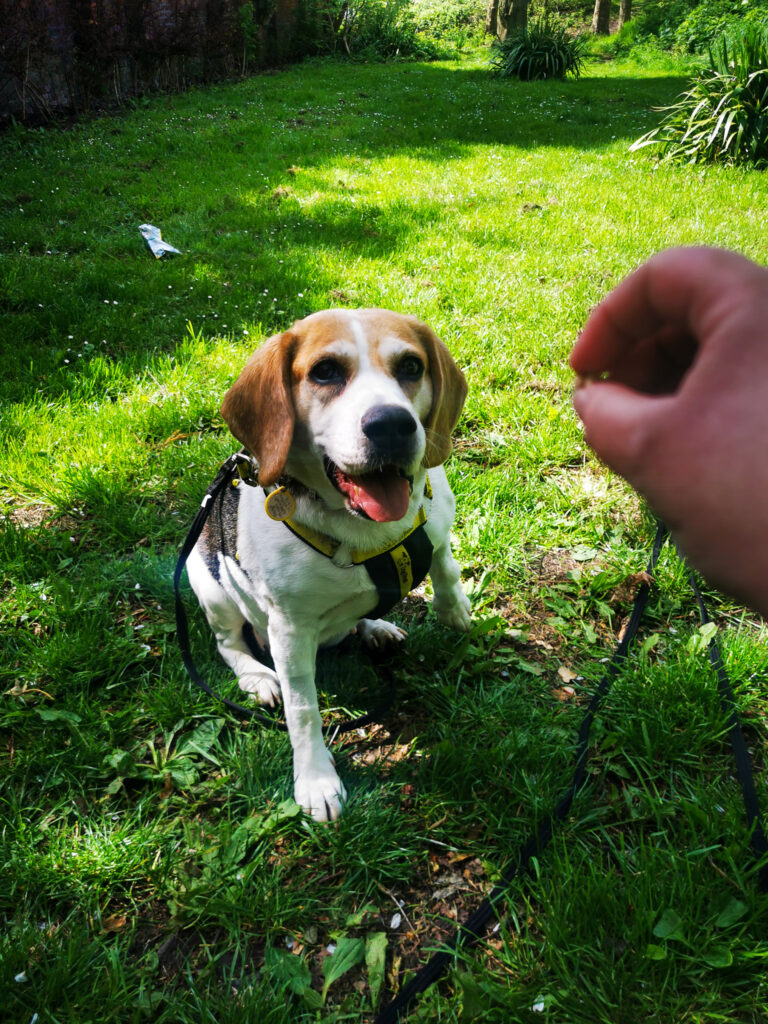
You stop making plans, not because you enjoy cancelling them, but because you know you’ll probably have to. Nights out? Forget it. Quick trips to the shops? Only if you can bribe someone to sit in for an hour. And yes, people start to wonder if you’ve dropped off the face of the earth, when in reality you’re just trapped inside with a beagle who thinks you nipping to Aldi is the end of the world.
It’s isolating, it’s frustrating, and it wears you down. You love your dog, of course you do, but after the hundredth “sorry, can’t come, the dog will scream” text, even you start to wonder if you’ll ever see the outside world again.
Seperation Anxiety in Dogs: Final Thoughts
Living with a dog with separation anxiety is basically like living with a furry stalker. They adore you so much that they cannot function without you, and if they were human, you’d have a restraining order in place by now. But here’s the thing — with patience, consistency, and a whole lot of boring repetition, it does get better.
The good news? You don’t have to do it alone. There are dedicated trainers who specialise in separation anxiety ( I have had some amazing tips and help from JG Behaviour over on instagram in the past and she was recommended to me by one of the trainers at Dog’s Trust – not an ad), and plenty of resources online that can guide you through the process step by tiny step. And don’t underestimate the basics — a good long walk, a proper play session, or some mental stimulation with training games before you head out can make your dog more likely to relax while you’re gone. A tired dog is usually a calmer dog.
The bad news? There’s no magic fix. It takes time, it takes consistency, and it takes keeping your cool when your dog is mid-meltdown. Calm and level-headed is the only way forward, even when you’d quite like to join them in howling at the door.
And for you? Vodka is always an option.
Separation anxiety is messy, frustrating, and yes, it can feel like house arrest. But with short, sharp, frequent sessions, tools to help, and the right support, you can show your dog that being alone isn’t the end of the world. One day, you’ll realise you’ve made it to five minutes, then ten, then half an hour without chaos — and trust me, those little wins feel huge.
Until then, it’s you, the dog, and Tesco telling you yet again that no, dogs are still not allowed in the fruit and veg aisle.


